Audit of the Accuracy and Positive Predictive Value of Red Flag Referrals to the Oral Surgery and Oral Medicine Departments from April 2023 to June 2023 Compared to the 2018 Audit Cycle
QI2
Shona Mathew
Shona Mathew (Dental Core Trainee), Stephen Adair (Oral Medicine Consultant)
Introduction
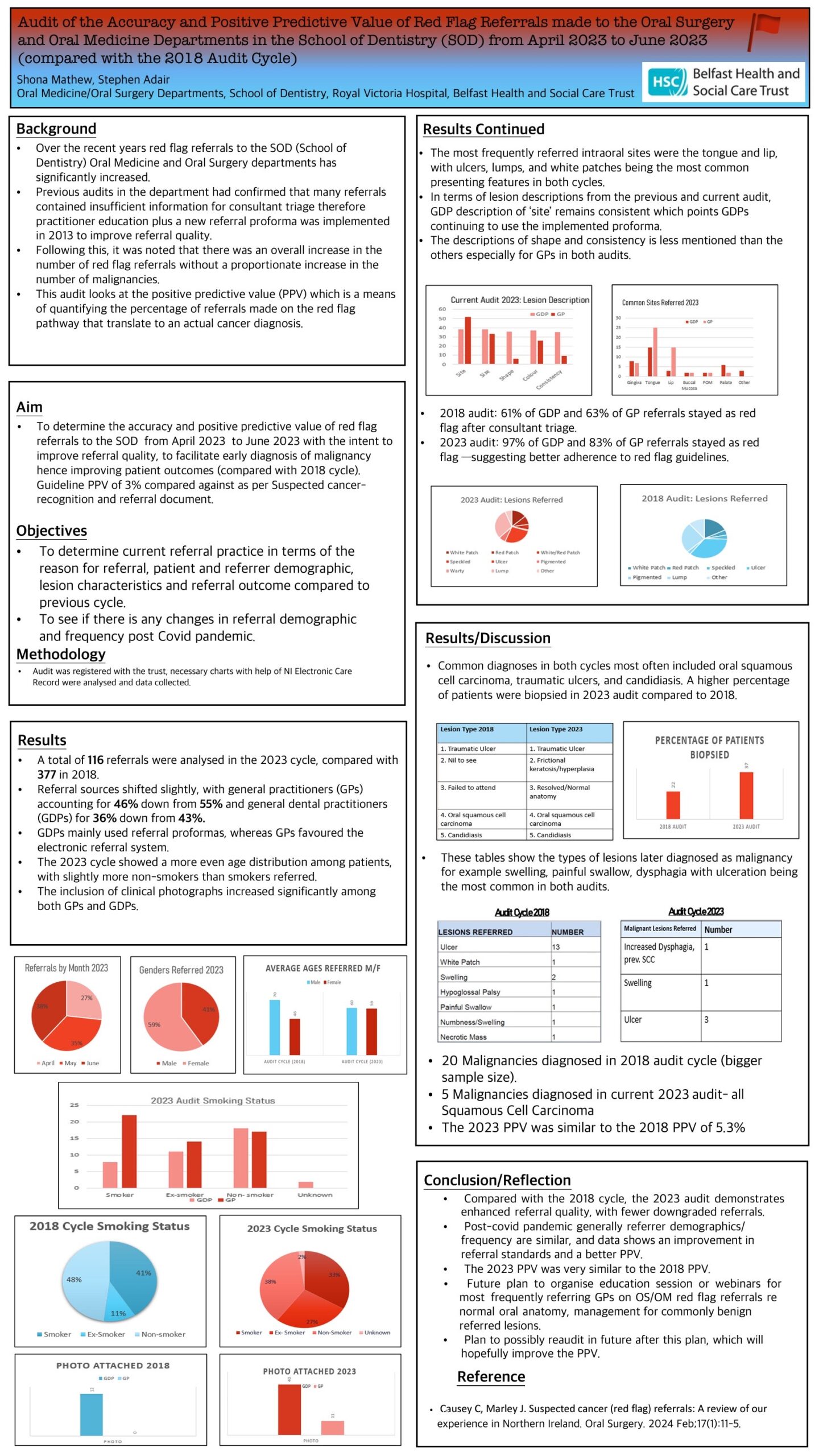
This audit evaluates the accuracy and positive predictive value (PPV) of red flag referrals to the Oral Surgery and Oral Medicine Departments at the School of Dentistry between April and June 2023, compared with data from the 2018 audit cycle. The objectives were to assess changes in referral demographics and frequency following the COVID-19 pandemic and to evaluate referral quality in line with NICE guidelines, which define an expected PPV for red flag referrals of around 3%. The aim was to enhance referral accuracy to facilitate earlier diagnosis of potentially malignant or serious conditions.
Methods
The audit was formally registered, and relevant patient charts were reviewed using electronic care records to collect demographic, referral, and diagnostic data.
Results and Discussion
A total of 116 referrals were analysed in the 2023 cycle, compared with 377 in 2018. Referral sources shifted slightly, with general practitioners (GPs) accounting for 46% down from 55% and general dental practitioners (GDPs) for 36% down from 43%. GDPs mainly used referral proformas, whereas GPs favoured the electronic referral system.
The current cycle showed a more even age distribution among patients, with slightly more non-smokers than smokers referred. The inclusion of clinical photographs increased significantly among both GPs and GDPs. The most frequently referred intraoral sites were the tongue and lip, with ulcers, lumps, and white patches being the most common presenting features in both cycles. Diagnoses for both cycles most often included oral squamous cell carcinoma, traumatic ulcers, and candidiasis. The 2023 PPV was 5.2%, showing a improvement from 5.3% in 2018.
Conclusion
Compared with the 2018 cycle, the 2023 audit demonstrates enhanced referral quality, with fewer inappropriate or downgraded referrals. Post- generally referrer demographics/frequency are similar, and data shows an improvement in referral standards and a better PPV.