Oral Manifestations of Blue Rubber Bleb Nevus Syndrome: A Case of Multifocal Vascular Lesions in the Upper Lip and Oral Mucosa (CR20)
LS7 4JH
Millie Forrest
Millie Forrest, Adam Bhanji
Background:
Blue Rubber Bleb Nevus Syndrome (BRBNS) is a rare congenital disorder characterised by multiple venous malformations predominantly affecting the skin and gastrointestinal tract. Oral involvement is uncommon but clinically significant as it may reflect wider systemic vascular pathology. Recognition in clinical practice is crucial for appropriate management and prevention of unnecessary intervention.
Case Description:
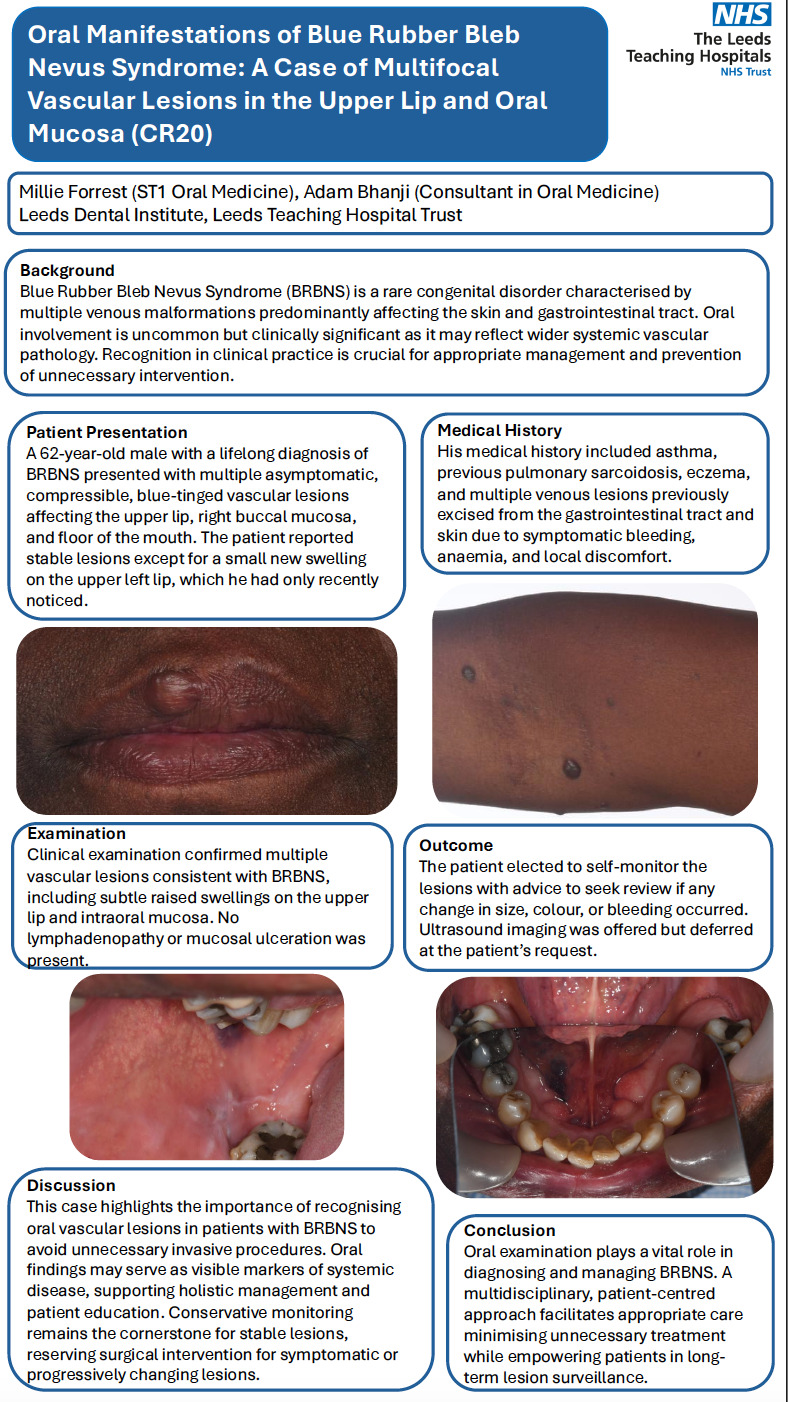
A 62-year-old male with a lifelong diagnosis of BRBNS presented with multiple asymptomatic, compressible, blue-tinged vascular lesions affecting the upper lip, right buccal mucosa, and floor of the mouth. The patient reported stable lesions except for a small new swelling on the upper left lip, which he had only recently noticed. His medical history included asthma, previous pulmonary sarcoidosis, eczema, and multiple venous lesions previously excised from the gastrointestinal tract and skin due to symptomatic bleeding, anaemia, and local discomfort.
Clinical examination confirmed multiple vascular lesions consistent with BRBNS, including subtle raised swellings on the upper lip and intraoral mucosa. No lymphadenopathy or mucosal ulceration was present. The patient elected to self-monitor the lesions with advice to seek review if any change in size, colour, or bleeding occurred. Ultrasound imaging was offered but deferred at the patient’s request.
Discussion:
This case highlights the importance of recognising oral vascular lesions in patients with BRBNS to avoid unnecessary invasive procedures. Oral findings may serve as visible markers of systemic disease, supporting holistic management and patient education. Conservative monitoring remains the cornerstone for stable lesions, reserving surgical intervention for symptomatic or progressively changing lesions.
Conclusion:
Oral examination plays a vital role in diagnosing and managing BRBNS. A multidisciplinary, patient-centred approach facilitates appropriate care minimising unnecessary treatment while empowering patients in long-term lesion surveillance.