Post extraction presentation of Orofacial herpes Zoster viral infection: A case report
CR12
Amie Smith
Manpreet Kaur, Paul Hudson
Background:
Herpes Zoster (HZ), commonly referred to as Shingles, is a reactivation of latent varicella-zoster virus within sensory ganglia. The incidence and severity of Shingles increase with age as well as with factors such as being immunocompromised, certain co-morbidities, psychological factors and being female. Usually, a patient with experience a prodromal period of abnormal skin sensations and pain, followed by a unilateral vesicular rash following a dermatome. Oro-facial manifestations of HZ do present but are less common, with the ophthalmic branch of the trigeminal nerve being the most likely.
Case summary:
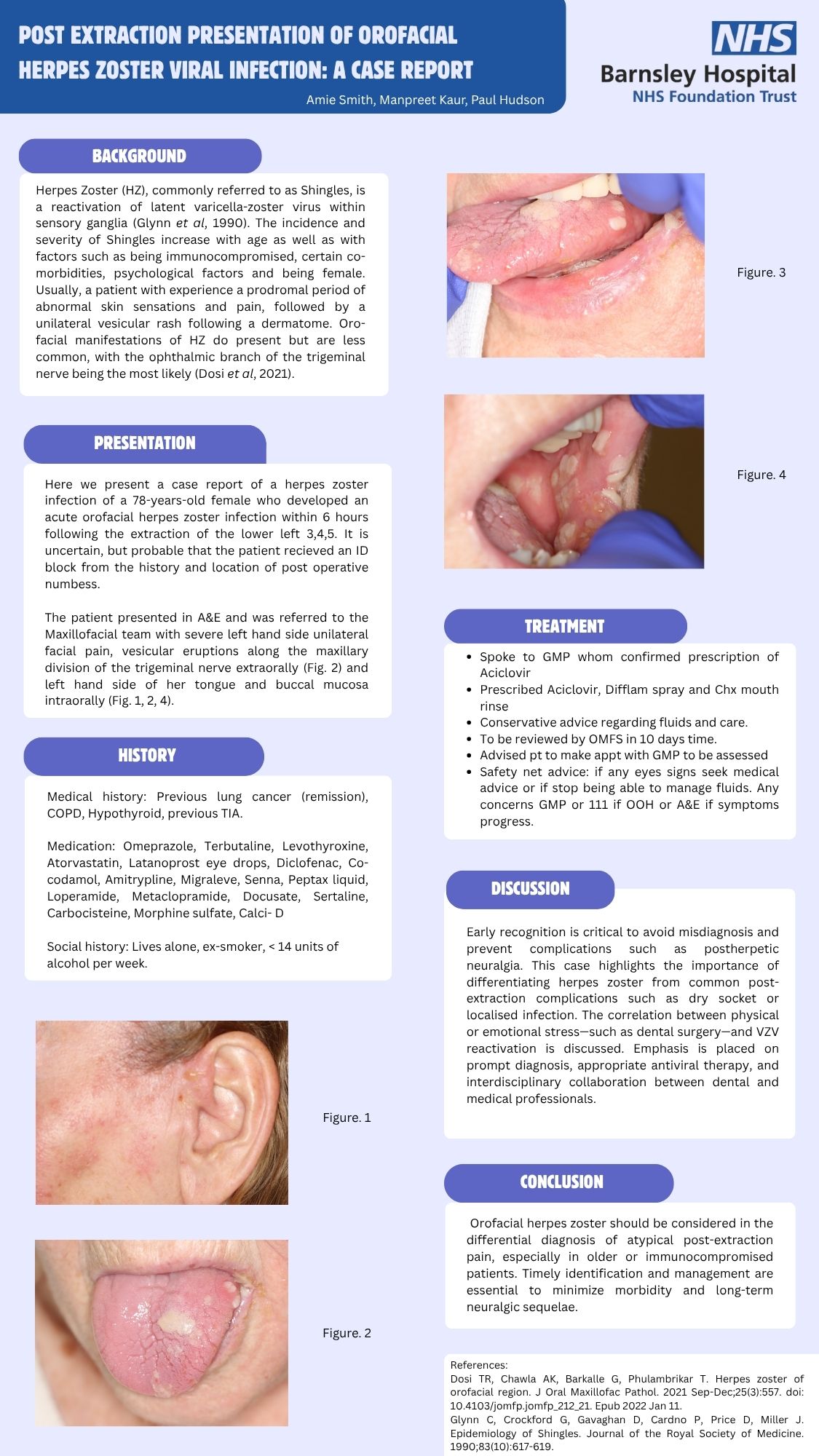
Here we present a case report of a herpes zoster infection of a 78-years-old female who developed an acute orofacial herpes zoster infection within 6 hours following the extraction of the lower left 3,4,5. The patient presented in A&E and was referred to the Maxillofacial team with severe left hand side unilateral facial pain, vesicular eruptions along the maxillary division of the trigeminal nerve and left hand side of her tongue and buccal mucosa. A provisional diagnosis of herpes zoster was confirmed clinically and managed with systemic antivirals, analgesics, and supportive care. Early recognition is critical to avoid misdiagnosis and prevent complications such as postherpetic neuralgia.
Discussion:
This case highlights the importance of differentiating herpes zoster from common post-extraction complications such as dry socket or localized infection. The correlation between physical or emotional stress—such as dental surgery—and VZV reactivation is discussed. Emphasis is placed on prompt diagnosis, appropriate antiviral therapy, and interdisciplinary collaboration between dental and medical professionals.
Conclusion:
Orofacial herpes zoster should be considered in the differential diagnosis of atypical post-extraction pain, especially in older or immunocompromised patients. Timely identification and management are essential to minimize morbidity and long-term neuralgic sequelae.