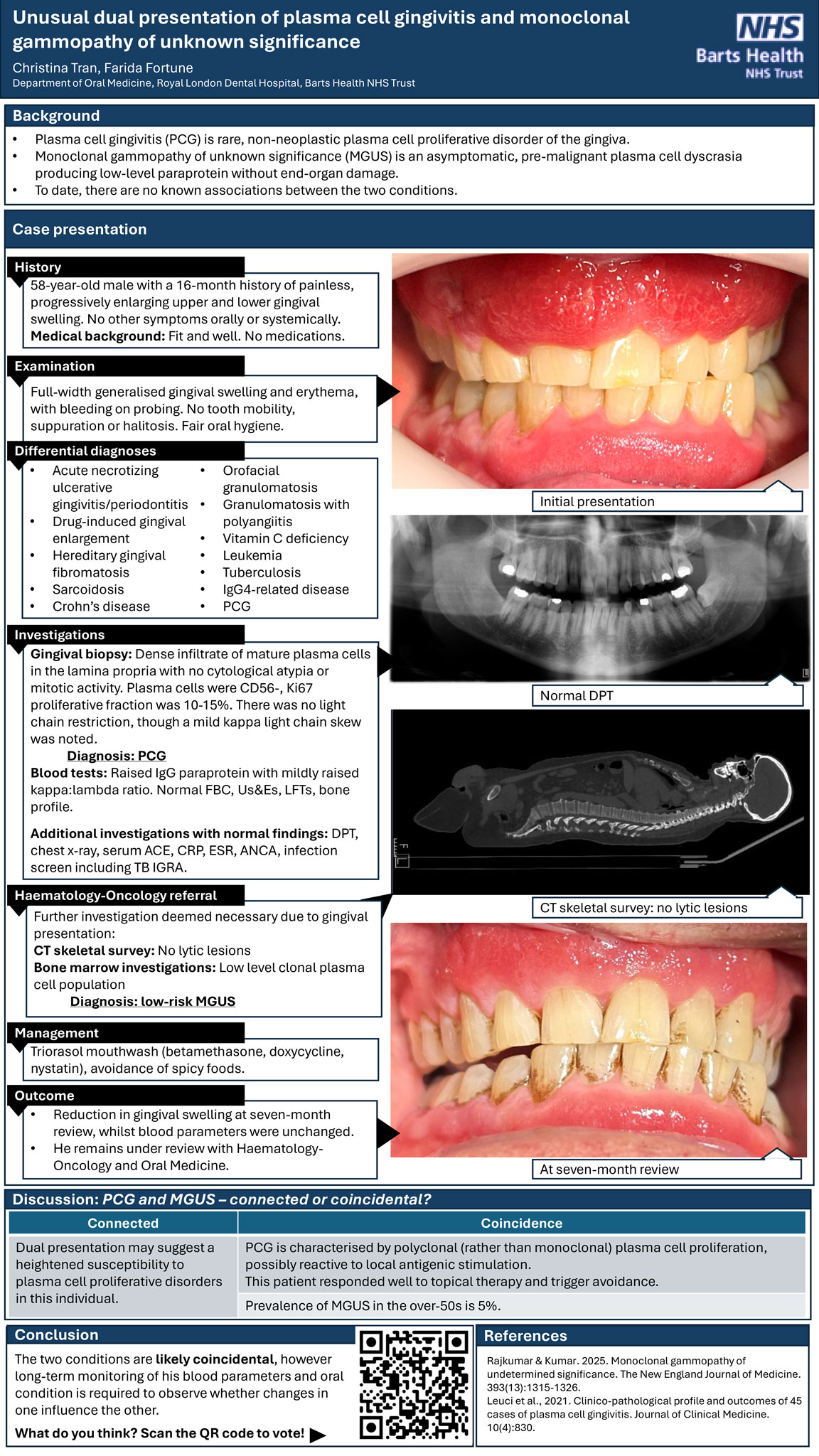
Unusual dual presentation of plasma cell gingivitis and monoclonal gammopathy of unknown significance
CR22
Christina Tran
Farida Fortune
Background:
Plasma cell gingivitis (PCG) is rare, non-neoplastic plasma cell proliferative disorder of the gingiva. Its aetiology remains unknown. There are no known associations between PCG and monoclonal gammopathy of unknown significance (MGUS), an asymptomatic, pre-malignant plasma cell dyscrasia resulting in low-level paraprotein production without end-organ damage.
Case presentation:
A 58-year old male presented with a 16-month history of painless upper and lower gingival swelling, progressively enlarging over time. He was otherwise fit and well. Examination revealed marked swelling and erythema across the full width of the upper and lower anterior gingiva, with bleeding on probing.
Histopathological analysis revealed a dense infiltrate of mature plasma cells in the lamina propria, demonstrating no cytological atypia or mitotic activity. Plasma cells were CD56 negative, Ki67 proliferative fraction was 10-15%, and there was no light chain restriction, although a mild kappa light chain skew was noted. This was consistent with a diagnosis of PCG.
Bloodwork revealed a normal full blood count, urea and electrolytes, liver function tests and bone profile, however raised IgG paraprotein with mildly raised kappa: lambda ratio was found. This prompted a referral to haematology oncology, who investigated further due to his unusual oral presentation. A CT skeletal survey showed no lytic lesions, whilst bone marrow investigations demonstrated a low level clonal plasma cell population. He was diagnosed with low-risk MGUS.
Seven months later, his gingival swelling has reduced with use of Triorasol (betamethasone, doxycycline, nystatin) mouthwash and avoidance of spicy foods. He remains under review with haematology oncology.
Conclusion:
This case highlights the unusual dual presentation of PCG and MGUS, prompting discussion over whether the two plasma cell disorders may be connected or coincidental.